


 Cart
Cart
 sales@molnova.com



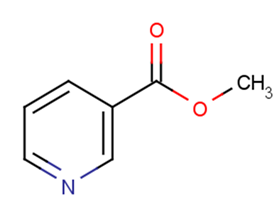
Methyl nicotinate
CAS No. 93-60-7
Methyl nicotinate( methyl pyridine-3-carboxylate )
Catalog No. M20301 CAS No. 93-60-7
Methyl nicotinate is the methyl ester of that is used as an active ingredient as a rubefacient in over-the-counter topical preparations indicated for muscle and joint pain.?The action of methyl nicotinate as a rubefacient is thought to involve peripheral vasodilation.
Purity : >98% (HPLC)
 COA
Datasheet
HNMR
HPLC
MSDS
Handing Instructions
COA
Datasheet
HNMR
HPLC
MSDS
Handing Instructions
| Size | Price / USD | Stock | Quantity |
| 100MG | 38 | In Stock |


|
| 200MG | Get Quote | In Stock |
|
| 500MG | Get Quote | In Stock |
|
| 1G | Get Quote | In Stock |
|
Biological Information
-
Product NameMethyl nicotinate
-
NoteResearch use only, not for human use.
-
Brief DescriptionMethyl nicotinate is the methyl ester of that is used as an active ingredient as a rubefacient in over-the-counter topical preparations indicated for muscle and joint pain.?The action of methyl nicotinate as a rubefacient is thought to involve peripheral vasodilation.
-
DescriptionMethyl nicotinate is the methyl ester of that is used as an active ingredient as a rubefacient in over-the-counter topical preparations indicated for muscle and joint pain.?The action of methyl nicotinate as a rubefacient is thought to involve peripheral vasodilation.
-
In VitroCell Cytotoxicity Assay Cell Line:HDFn (Human neonatal fibroblast cell line) Concentration:1 mg/mL, .2.5 mg/L, 5 mg/L, 7.5 mg/L and 10 mg/mL Incubation Time:24 h Result:Was extremely toxic to fibroblasts at 10mg/mL concentration, and 90% of the cells were still alive at5 mg/mL concentration.
-
In VivoAnimal Model:Writhing model of Swiss albino mice induced by acetic acidDosage:5 mg/kg, 10 mg/kg Administration:Oral gavage; Single dose. Before Acetic acid treatment (10 mg/kg; i.p.; Single dose)Result:Caused a significant reduction in the number of writhes induced by acetic acid.At dose of 10 mg/kg, has a similar analgesic effect to Aspirin (HY-14654) within 30 minutes.Animal Model: Hot plate test Swiss albino mouse model Dosage:5 mg/kg, 10 mg/kg Administration:Oral gavage; Single dose Result:Could significantly prolong the latency of mice's response to thermal pain after 30 minutes of administration.Animal Model: Chorioallantoic Membrane (CAM) model Dosage:5 mg/mL/egg, 1 mg/mL/egg, 100 mg/mL/egg Administration:Result:Promoted microvasodilation at 5 mg/mL/egg.Promoted vasodilation to a greater extent, but mild bleeding occurred at 10 mg/mL/egg. Caused extreme vasodilation, leading to blood vessel rupture and bleeding at 100 mg/mL/egg.
-
Synonymsmethyl pyridine-3-carboxylate
-
PathwayOthers
-
TargetOther Targets
-
RecptorOthers
-
Research Area——
-
Indication——
Chemical Information
-
CAS Number93-60-7
-
Formula Weight137.14
-
Molecular FormulaC7H7NO2
-
Purity>98% (HPLC)
-
SolubilityDMSO:27 mg/mL (196.87 mM)
-
SMILESCOC(=O)c1cccnc1
-
Chemical Name——
Shipping & Storage Information
-
Storage(-20℃)
-
ShippingWith Ice Pack
-
Stability≥ 2 years
Reference
1.Pabst H Schaefer A Staiger C et al. Combination of Comfrey Root Extract Plus Methyl Nicotinate in Patients with Conditions of Acute Upper or Low Back Pain: A Multicentre Randomised Controlled Trial[J]. Phytotherapy Research 2013 27(6):811-817.
molnova catalog



related products
-
Momordicoside X
Momordicoside X displays moderate insulin secretion activity.
-
234 CW
234 CW
-
Phospho(enol)pyruvic...
Phosphoenolpyruvic acid monopotassium salt is involved in glycolysis and gluconeogeneis. In glycolysis PEP is metabolized by Pyruvate Kinase to yield pyruvate. In plants PEP is involved in the formation of aromatic amino acids as well as in the carbon fixation pathway.
